
Which cover do you like for "Jesse?"

View Results

Loading ... Loading ...

Which cover do you like for "Finding Faith?"

View Results

Loading ... Loading ...

Which cover do you prefer for "Rode to Death?"

View Results

Loading ... Loading ...

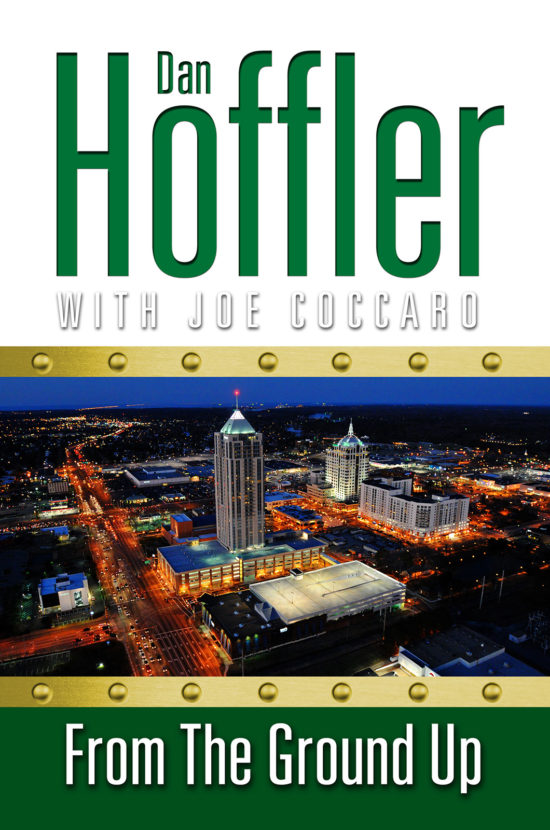
From The Ground Up

Buy this title now from these booksellers or a store near you.
Amazon Barnes & Noble Books a Million Powell’s Books Indie Bound

“Neither of us knew if the establishment would accept us. We were kindred spirits in that way….Dan’s friendship has been very important to me.”
— Mark Warner, current U.S. senator and former Virginia governor.


From the Ground Up is the journey of real estate magnate Dan Hoffler, a person from a very modest family, a kid with average grades and a big smile, who succeeded in business on the force of personality and a strong belief in himself.

Hoffler’s story is rife with life lessons on finding success, coping with controversy, and always enjoying life. He is a world traveler and big game hunter who tells of his harrowing pursuit of polar bear, rhino, and mountain sheep in some of the most remote and dangerous regions in the world. The book includes anecdotes from NFL Hall of Famer Bruce Smith, U.S. Senator Mark Warner and former Virginia Governor Doug Wilder.
“I liked that Dan wasn’t stuck up. He wasn’t one of those people. He was a man of integrity, a man of his word….You can’t confide in everyone, but I could confide in him.”
— Bruce Smith, former defensive end for the Washington Redskins and Buffalo Bills and NFL Hall of Fame inductee.

“Dan values family very highly. A lot of the respect that he has on a personal level carries forward in business….Everyone needs someone to talk to, and I trusted him implicitly.”
— L. Douglas Wilder, former Virginia governor.


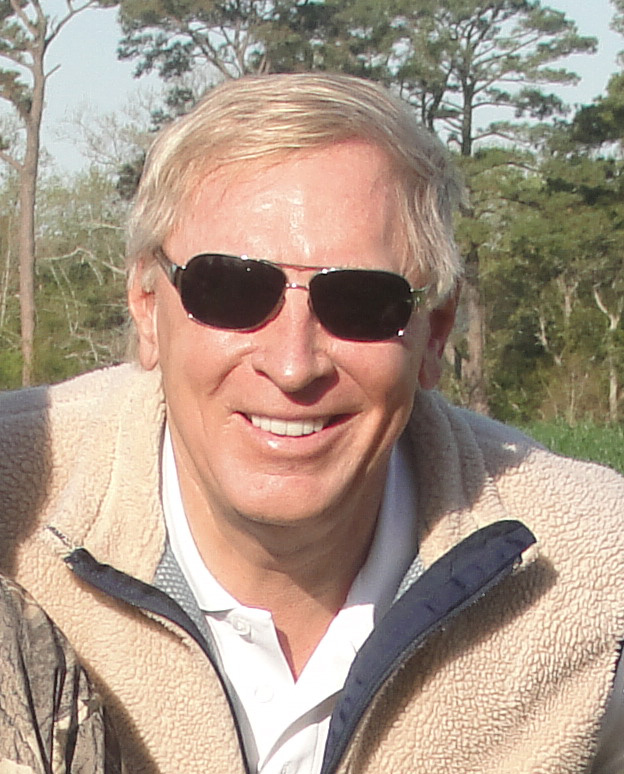
Dan Hoffler is a commercial real estate magnate whose Virginia Beach, Virginia company, Armada Hoffler, has built marquee office towers, hotels, and retail hubs in major cities along the East Coast. He is an outdoor enthusiast and marksman who has hunted big game on five continents. A graduate of Campbell University in North Carolina, Dan has served as a director on several state and private boards, including The Shaw Group, a Fortune 500 company. Dan has four children and lives on Virginia’s Eastern Shore with his wife, Valerie.

Joe Coccaro is executive editor of Koehler Books and a former deputy managing editor of The Virginian-Pilot newspaper in Norfolk, Virginia. In his thirty years as a journalist, Joe has won more than a dozen individual writing awards for business, investigative and news reporting. He is a graduate of Syracuse University.


Chapter VI

Armada

“People become interested in you when you

become interested in them.’’

I was spending more and more time in New York for business and for fun. I had met several people at the start of their careers with as much ambition as me. It was already apparent that who you know is worth at least as much as what you know—maybe even more in my line of work. A friend led me to Dun & Bradstreet, which led me to Eastern International. As my world expanded, my ideas for career and success evolved too. The seeds of confidence so meticulously planted in me by my parents and grandmother had taken root. I wanted something bigger than a job; I wanted an opportunity to be self-made and self-directed. I didn’t have to look much beyond my hometown to find those things.

The push to the suburbs that landed my family in Churchland continued its surge throughout Hampton Roads. Populations in the region’s older core were declining. Growth was pushing south into Chesapeake, which had largely been farmland when I was growing up and even in the late 1970s was still viewed as the hinterlands of Hampton Roads. Virginia Beach was a different story. It was no longer just a resort strip with hoity homes on the north end and a few hotels and bungalows in the rental district. The region’s plethora of Navy and Marine bases supplied the area with a skilled labor pool, young families and lots of retirees. The residents needed homes and businesses needed offices, stores and warehouses.

Norfolk was still very much the power and cultural center of the region. Banks, commercial real estate and law firms congregated there. Many of the mover and shakers were from “old money’’ or had married into it. It was a cliquish group that played tennis together, attended the same Protestant churches, barbequed at the yacht club and hosted weddings at the Botanical Gardens. This circle of bankers, lawyers, railroad executives and landowners collaborated on deals and often brought new business to town. They also significantly influenced who held elected office, and they could ostracize those who worked against them. By and large, these were honorable men with good intentions. But as with so many towns, Norfolk’s ruling class practiced a passive elitism that even today ruffles businessmen and leaders from neighboring cities.

Being from Portsmouth definitely placed me outside of Norfolk’s inner circle. Portsmouth was the blue-collar town across the Elizabeth River. The two cities were within eyesight of each other, connected by bridge tunnels and passenger ferry boats. They shared much the same rich history, being formed during the colonialist days, building ships for the Navy and battling the North during the Civil War. Yet Portsmouth and Norfolk behaved like sibling rivals, rarely cooperating and often acting snobbish or jealous toward each other.

Instead of trying to work through Norfolk’s establishment, I decided to go around it. Chesapeake, which borders Portsmouth to the west and south, was quietly, but persistently, growing. Its population had long surpassed the one hundred thousand or so living in Portsmouth. Chesapeake was also quickly gaining on Norfolk, which would soon dip below two hundred thousand residents. Residents and businesses wanted to be in the suburbs, and Chesapeake had the space to accommodate that sprawl.

Unlike Norfolk, Portsmouth and even Virginia Beach, Chesapeake lacked a distinguishable center. Its courts and city hall were down in the Great Bridge area, which was slighted as little more than a northern outpost of North Carolina. It was a village surrounded by farmers and only about ten miles from the Carolina border. But there was this other section of the city, closer to Virginia Beach and Norfolk’s epicenter.

The region’s main highway, Interstate 64, ran through the middle of Greenbrier, named after a Chesapeake tree nursery that grew acres of shrubs and trees. As a teenager, I hunted quail on the flat, somewhat swampy fields there. It was just a few miles from where I-64 intersected with I-264, the other major highway that ran through the region, connecting Portsmouth and Norfolk to Virginia Beach and the Oceanfront.

There was another not so subtle shift descending on Hampton Roads that would goose the region’s population shifts: defense spending was poised to ramp up. President Nixon had cut the defense budget by almost thirty percent after ending the Vietnam War. The trend continued throughout most of the 1970s. Generals, admirals and some hawkish politicians, including a former California governor running for president, argued that the cuts went too deep and that the country was vulnerable to the Soviets. It was time to restore our military might, which meant that area shipyards would soon be busy again and the Navy would be hiring sailors, a double shot of adrenalin for Hampton Roads. If logic followed, that also meant that companies that supply the Navy, Marines and other armed services with everything from toilet seats to radar screens would want to set up shop locally and need space to store parts. There were two locations that, in my view, would be perfect for the supply warehouses and office buildings they would need. One was a hotel site off Diamond Springs Road in the heart of Virginia Beach. It was a dump, literally a whorehouse on nine acres, located conveniently close to several Navy bases. The other tract was one hundred acres of woods and fields in Chesapeake, abutting Greenbrier Parkway and I-64.

An investment company called Greenbrier Associates recognized the potential of the area and had purchased much of the old tree nursery and some surrounding land. The owners were from out of state and had dispatched lawyers and engineers to have the land subdivided and approved for development. Greenbrier worked with local contractors, building housing and retail space. But the company was also in the business of reselling land to raise some cash.

I saw no point in competing with Greenbrier or others who were feeding the housing boom. Instead, I wanted to be the go-to guy for businesses in need of offices and warehouses. A new concept for commercial space had started to emerge in some larger cities around the country, generically referred to as “flex’’ space. The idea was to supply buildings that would double as an office and warehouse. Until that time, businesses would often have to buy or lease separate buildings in different locations—a warehouse in an industrial park and offices in a downtown or pedestrian area. With flex space, a company would only need a single building. A plumbing supply store, for example, could carve out a small office and counter in the front of a building and use the rest of the space to store inventory. One of the problems I saw was that warehouses were often ugly buildings tucked away in old industrial parks or inaccessible locations. These warehouses were sometimes gritty and next to even less attractive heavy industry or assembly plants.

Warehouse and office space could be compatible and made to look attractive. The concept was pretty simple: design the front of buildings with the same curb appeal as full-fledged offices and design loading platforms and huge bay doors in the back and out of view. Providing stylish exteriors would mesh well with other commercial buildings that might wish to locate nearby, such as hotels and other professional offices.

I approached Greenbrier Associates, which said it would sell the land off the interstate for twenty thousand dollars an acre. Greenbrier had built a huge retention pond on the site for drainage, and the land had the necessary zoning for commercial buildings. Of the one hundred acres, about seventy could be developed. While in discussions with Greenbrier, I also negotiated a purchase price of three hundred and twelve thousand dollars for the old hotel off Diamond Springs Road. Through my contacts in Virginia Beach, I had heard that a company already located off Diamond Springs wanted to expand and needed two or three additional warehouses. I also formed a list of other prospects for the Greenbrier site, mostly defense-related high-tech companies.

Now, I needed money.

Among the many people I met in New York when I was with Dun & Bradstreet and Eastern International was Peter Nitze and Frank Stagen, owners of a financial consulting business. Nitze-Stagen had a client with a lot of money to invest, a Texas oil man looking to diversify into real estate. The company, Armada Petroleum, had made hundreds of millions of dollars in just about every aspect of the oil business. The Houston-based Armada had offices in Geneva, New York and London, and business associates around the world, including Saudi Arabia.

The oil business surges through boom-and-bust cycles and in the mid-1970s, it had been roaring. In the fall of 1973, the Arab nations of OPEC, the Organization of Petroleum Exporting Countries, slapped the U.S. with an embargo because we supported Israel in the Yom Kippur War. With supplies choked off, American drivers were forced to wait in long lines to gas up. The energy crisis was so bad that the lights on the national Christmas tree weren’t turned on that December to save energy. The U.S. economy got walloped with stock prices plunging forty percent. Our economy and sense of security were in a tailspin because of a perceived energy shortage.

Wildcatters from Texas and the Southwest responded in force. Improved drilling methods and geologic science unleashed an army of independent riggers and explorers backed by oil entrepreneurs anxious to discover, buy and refine domestic crude. These spirited risk takers drilled nine times as many wells in the 1970s as the huge international conglomerates. The conglomerates provided seed money and men in the field anted up grit and determination. It was supply and demand at its rawest and most daring.

Armada Petroleum was one of the many independents to join the stampede. It was headed by a debonair businessman with a degree in chemical engineering from Texas A&M, James E. Fisher. Jim had been in the oil business since the early 1960s and made a fortune buying and shipping Texas crude around the world and financing domestic explorations. He was at the epicenter of a boom that, a decade earlier, created a wave of more than seven hundred mergers and acquisitions of oil explores, traders and refiners. Jim worked for some of the smallest and biggest. His resume included stints with Sinclair Oil and Atlantic Richfield Company, better known as ARCO. Jim eventually struck out on his own as a consultant and, riding the oil-boom momentum, formed Armada Petroleum in 1974. He was, as he put it, one of the small guys trying to move fast and feed the burgeoning demand from a country shocked by how dependent it had become on oil imports.

Jim often did business with a handshake or telephone call. He was well- known throughout the industry as a savvy risk taker who kept his word. With backing from the big players and a promise from them to buy, Jim became an explorer, buyer and seller of crude. In just four years, he had built Armada Petroleum into a two-billion-dollar business.

By 1978, the tide of the fickle oil industry shifted again. The federal government had imposed a tight regulatory grip on crude pricing as a result of OPEC giving a lot of oil traders fits. By the end of the decade, regulators were enforcing a series of complex laws aimed at leveling crude prices. Those refining “old oil’’ from domestic wells had to, in effect, subsidize refiners importing more expensive “new oil.’’ This system was intended to keep as many refiners in business as possible, which in theory would increase oil supplies and stabilize gas prices. But for some free-marketers, it was government meddling at its worst.

Armada Petroleum decided to shift some of its wealth into land development as a hedge. Fisher and his partners could see that money was being made by building and leasing commercial offices. The company owned land and invested in a few small office building projects in New York, Philadelphia, Houston and Dallas. Fisher didn’t know much about land development, but he did know that fully leased office buildings could throw off lots of cash, so Jim decided to take calculated risks, just as he had in the free-wielding days of wildcatting for crude in the Southwest desert. The word circulated in New York and elsewhere that Armada Petroleum had money to spend and was looking for a partner.

Jim was intrigued by the stories he was told about this young guy from Virginia with some big ambitions. His partners did some checking around about Hampton Roads and about me and in October 1979, about a week before my thirty-first birthday, a meeting was set. I was advised to stay in the Whitehall Hotel, now the Crowne Plaza, which was next to Armada Petroleum’s downtown Houston headquarters. Mr. Fisher, I was told, was a man of class and substance. He was known as a gentleman and impeccable dresser. I didn’t want to come off as something less, so I got a haircut, packed my best suit and booked a room at the swanky hotel.

I didn’t think I heard the reservations clerk right when she quoted me two hundred and ten dollars for one night. That was almost a monthly mortgage payment on my home. I was doing better financially at the time, earning about thirty-five thousand in salary with Eastern International. But still, my budget was tight.

Mary Jo and I had our first child, Sara, about a year earlier, naming her after my mom, but without the letter “h’’ in her name. We had just moved from a townhouse in an old but historic section of Portsmouth into a modest three-bedroom home in a suburban community just west of where I was raised. Mary Jo supported my desire to launch my own company and had tolerated, but not fully embraced, the many business dinners and parties that brought us to this point.

Mary Jo enjoyed our family time together and was happiest when we drove on summer weekends to Nags Head on North Carolina’s Outer Banks with her mother and our daughter. I would fish in the surf while they relaxed on blankets and beach chairs. We would spend most weekends together with family and friends. I knew that running my own business would siphon a lot more of my energy and time from family, but I could not calculate just how much. All I knew was I wanted more than a steady job with weekends off.

I swallowed hard and made the pricey reservation for one night in Houston, thinking that I would fly in, get some sleep, meet with Mr. Fisher the next morning and head back to Hampton Roads that afternoon. I spent several days honing my presentation, hoping I wasn’t being some naïve goofball about to get scoffed at by some fancy billionaire. Whatever the result, I figured I would learn a few lessons and make some knew contacts.

I arrived at Armada Petroleum for my eight o’clock appointment. Mr. Fisher’s receptionist pleasantly greeted me and I took a seat. My suit was pressed, my plans in a briefcase and my pitch rehearsed. After an hour passed, the receptionist apologized. An emergency had come up that needed Mr. Fisher’s attention. Another hour and a half passed, and another apology from the receptionist.

I went to lunch, returned and waited some more. Another hour, and then another; still no Jim Fisher. By then, mild irritation swelled into full-blown anger. I began thinking that this was some sort of ruse, that I was some kind of sucker being jerked around and snickered at behind closed doors. What in the hell was I thinking. I had already had to rebook my return flight and knew that I would have to spend more money—that I didn’t have—for another night at the swanky Whitehall.

I kept thinking about storming from Fisher’s waiting area and leaving him a curt message. But something told me to stay. I kept telling myself to be patient. I am already here for another night, so I figured I may as well ride this out. If I’ve been duped, another hour wouldn’t escalate my humiliation.

At about four o’clock, a slight, impeccably dressed man with a Howard Hughes-like thin mustache and slick black hair emerged. Jim Fisher was courtly and soft-spoken, a slight man just as others had described. An apologetic Mr. Fisher told me to call him Jim as we entered through the double doors into his office. The view of downtown Houston below was expansive. My eyes darted from oil paintings on the walls to lustrous wood paneling and cabinets, to an oval conference table, to the panorama outside the windows. Jim sat behind an ornately carved desk that I would later learn cost sixty thousand dollars, more than the price of my first house. I had never seen such a richly appointed office. I tried not to look awestruck, but I doubt that I succeeded.

I stayed calm, but was anxious to pitch my plan just as I had rehearsed. I had blueprints, plats and appraisals spread out on the desk, but Jim seemed only mildly interested. He politely looked at maps, blueprints and cost figures. He listened without interrupting, asking only a few very basic questions about my proposal. My twenty minutes were up, and I wasn’t feeling optimistic. I really felt I needed to sell Jim on the concept, to make him see the potential.

Once the formality ended, Jim told me to relax. He wanted to know about me, not my plan. He had already done his homework on the economics. He wanted to know about my family, my parents, where I was raised and went to school. He asked me about my time with Dun & Bradstreet and experience with Eastern International. We talked about my association with Nitze-Stagen and others in New York financial circles.

At one point, Jim asked where I bought my suit. A Portsmouth department store, I told him. “We need to do something about your clothes,’’ he said with a slight grin. In recalling our first meeting years later, Jim said this about me: “This guy was a real salesman, and he dressed like one.’’

Jim talked about the Texas business culture that afternoon. It was high-risk, high-reward and fast paced. In Texas, you took a man on his word, even when millions of dollars were at stake. Jim clearly wanted to make sure I deserved his trust. Jim and I talked and laughed that afternoon for nearly an hour and a half. I still wasn’t sure Jim liked my business plan, but he seemed genuinely interested in me. At the very least, I figured I had made a friend and had a rare glimpse at big-time success. He was unlike anyone I had ever encountered.

Jim told me to sit tight while he made a call. He summoned the person on the other end of the line to his office. Not long afterward, Ken Griffin, Jim’s chief finance guy, showed up. Ken had a check for me and wanted to know who to make it out to. He told me to deposit the money in my business account and wanted to know the name of my company. I meekly admitted that I didn’t have a company, let alone a name for it or anything other than a personal checking account. Ken smiled and told me to take the check anyway and to fill it out and deposit it as soon as I incorporated.

Our deal was pretty straightforward: Armada Petroleum would invest seventy-five percent in our venture and I would cover the rest. Our ownership split would be the same. I would run the business and, assuming we were making money, Jim’s company would continue to finance the bulk of the operations.

Before he sent me on my way that afternoon, Jim told me that he didn’t know whether my business plan would work. What I do know, he said, is that “I believe that you believe your plan will work.’’ He said he had a good feeling about me and that he had learned after many years in the speculative oil business to trust his “gut’’ about people. “I want to take a chance on you,’’ Jim said. “I have a gut feeling, my boy, that you’re going to make me money. In Texas, we go a lot on gut.’’

I flew back the next morning, astonished. Inside the pocket of my department store suit was a check for two and a half million made out to no one. These men, strangers really, who I had met less than a day ago, gave a blank check to some kid in his twenties who wanted to buy land in a Navy community they knew very little about. That check was soon deposited into the business account of newly formed Armada Hoffler.


Leave a Reply

Your email address will not be published. Required fields are marked *

You may use these HTML tags and attributes: <a href="" title=""> <abbr title=""> <acronym title=""> <b> <blockquote cite=""> <cite> <code> <del datetime=""> <em> <i> <q cite=""> <strike> <strong>

IN THE NEWS:

  • Facebook
  • LinkedIn
  • Twitter
  • RSS Feed

Which cover do you like for "Refuge?"

View Results

Loading ... Loading ...

Which cover do you like for "Virginia is for Mysteries?"

View Results

Loading ... Loading ...

Which cover do you like for "The Drone Enigma?"

View Results

Loading ... Loading ...

Which cover do you now like for "Murder in the Rockies?"

View Results

Loading ... Loading ...