Which cover do you like for "Jesse?"

View Results

Loading ... Loading ...

Which cover do you like for "Finding Faith?"

View Results

Loading ... Loading ...

Which cover do you prefer for "Rode to Death?"

View Results

Loading ... Loading ...

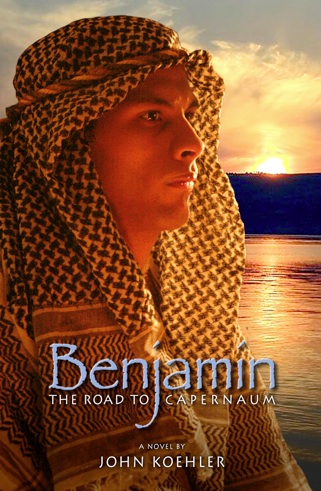
Benjamin – The Road to Capernaum

Buy this title now from these booksellers or a store near you.
Amazon Barnes & Noble Books a Million Powell’s Books Indie Bound

$17.95

“They brought a paraplegic to him, carried by four men.”
Mark 2:3 MSG

Before that day he was a weak and worthless cripple, a “sinful man” according to his father. Afterwards he was completely healed of his physical disabilities at the hands of the rabbi from Nazareth. Destined for the dungeons of society, suddenly a world without limits was open to him. This is the story of Benjamin, a man who was given a new body, a new life, and a new chance to live life the way he had always dreamed.

“Redemptive stories are always, always, always the best stories. We need them to suture our hearts and duct tape our souls. We need them to take us somewhere where the view is grand and wide and gripping. This tale of personal redemption will rocket you through history and drop you off at the time of Jesus. You will feel the pulse of a first-century miracle. You will dangle over the edge of reason. You will drink deeply from true principles of faith and life. If you ever wanted to be seized by redemption, don’t miss this trip.”

Michael Simone, D. Min.
Senior Pastor, Spring Branch Community Church

“How would your life have changed had Jesus placed his hand on your brow and healed you of your worst affliction? John Koehler’s new book, Benjamin, The Road to Capernaum, is a fascinating tale of just such a miracle. Benjamin’s life was drastically changed from the moment he was “Christ touched,” to his dramatic struggles against the brutal forces of Rome, with all of her prejudices and might hostile to the fledgling Christian religion.”

Charles Randolph Bruce
Coauthor, Rebel King Series of Novels


Excerpts

CHAPTER ONE
An Expectant Father

Capernaum
AD 9

My birth town, Capernaum, is a small fishing town located on the northern coast of the Sea of Galilee. In addition to fishermen, many tradesmen and merchants lived off the caravans and abundant trade that traveled the main road between Damascus to the east, and Tyre on the coast to the west.

About 1,500 people lived in our town, depending on the time of year and the call of the fish and trade. Our people were a lively mix of Jews, Greeks, Syrians, Phoenicians, and, of course, Romans. At their worst, the Romans killed and abused us. At their best, they built beautiful buildings, walkways, and temples, not to mention amazing roads and aqueducts. They killed, they built … hey, aren’t the Romans great?

The Roman garrison in Capernaum was led by a principale named Marius. He was tall, with blond hair and blue eyes, which made him an object of scornful affection for many women in the area.

He was a fair man for the most part, and had little trouble with our people, helped in no small part by the decisive way he handled the local uprising, four years before I was born. Four men had been crucified, and the memory alone was enough to pacify the people. Amazing what a few crucifixions can do.

As a result, the elders in the town, in league with the Romans, would not allow zealots or others to incite us in any way. Troublemakers and hooligans were forced to leave, sometimes with help from the Romans.

Capernaum was by and large a beautiful little bustling town, unnoticed perhaps by the world, but cherished by the people who lived there. Because my father, Philip, was a senior rabbi, we lived in one of the better homes, with a cool courtyard and several rooms, including the schoolroom. Our house was directly connected to the temple of my faith: the workplace of my father and a fabulous playground for the first years of my life.

On the day of my birth, my father stayed in his prayer room, pacing back and forth, reading the sacred scrolls and praying. It was against tradition for a father to be in the birthing room, so he had hourly reports brought to him by his beadle, an old man named Rafe.

“What now, Rafe?” asked Philip, as the old beadle wandered back into the prayer room. “What news of my son?”

Rafe stopped and looked at the rabbi with a smile behind his long gray beard. He laughed and said, “And what if a girl, Rab Philip?”

The rab sputtered and began pacing again. “God would not curse me with a girl, after the prayers and offerings I’ve given. Am I not a holy man? Don’t I lead my people with good grace and with the Torah as my guide?”

“A holy man, you are, oh yes,” answered Rafe,  “sometimes perhaps too holy. And have you forgotten the Lord’s word concerning the love he feels for all his children, including girls? We don’t sacrifice our daughters to Baal anymore, Philip!”

Philip looked down at the small, stooped old man and felt immediate anger that he would speak to him that way. But Rafe was smiling, and Philip knew he spoke the truth, so his anger diminished. He realized once again that God had given him this beadle to hold him accountable to his ministry and his people.

Taking the beadle into his arms, he kissed him on both cheeks and embraced him. “You’re right, my friend! I will also be happy if it is a girl. But I will be MORE happy if it is a boy!” They both laughed; then they prayed together that God would, in fact, bless the rab with a boy.

Rome
AD 52

Two days have passed, and the dove is still here. I can’t see it, but I can hear its wings flapping in the window alcove. I’m beginning to think that the bird may be wounded, perhaps blown into the building during the storm. That would explain why it’s not leaving and has spent the past days trying to fly away.

It beats its wings so hard, scrabbling on the sill, that I think it may injure itself even more if it doesn’t stop. But it won’t stop, constantly fluttering and trying to fly. It must be tired by now, after struggling nonstop for few days, with no food or water.

Listen to me! I can’t believe I’m beginning to worry about a bird! The guards would laugh at me if they knew. But I hope that they don’t discover this bird, or they might kill it, just for the pleasure.

My guards are all African slaves, as black as night. They speak Swahili when they aren’t forced to use the everyday Greek of the prison; I’ve already learned many new words and phrases of their language, to add to what Zudu taught me years ago.

My guards are proud men, strong in body and completely committed to the needs of their Roman masters. Their bodies are covered with rows of decorative scars. Their hair is braided with beads, and jewelry adorns their ears and noses.

They have little pity because any hope of being released from their slavery is tied directly to the level of torture and abuse they can bring upon the condemned.

Kintu, captain of the five guards that are responsible for my section of the jail, sometimes watches me quietly and does not participate in the loud sport of his men when the work of torture is at hand. He is proud and quiet, and I speak to him when I can, for even though he’s the man charged with killing me, I sense he is a man I can trust.

In addition to the Roman short sword, the guards also carry African spears made of wood, with ornate metal tips. Hanging from their belts is a device about the length of a man’s forearm. It’s made of wood and twine, and beads are woven into the handle. Lion claws are embedded into the wooden slats at the end and held together with twine and sinew.

Many of my sores were given by what they call the “simba udole,” the lion’s claw. I fear it more than their swords, because the wounds do not heal well and have left so many scars on my body that they call me Claw.

They say they are making me Swahili.

Six days ago they took me to the lion’s den again, to “teach me the wisdom of the lion” and to give the lions a taste of me. They laughed as they dragged me down into the bowels of the amphitheater. The smell of meat and wildcat washed over me, their cries and roars filling my head.

We stopped at one cage that housed a single lioness. She paced back and forth within her cage, a protesting growl issuing from her in quiet anger. She was beautiful, sleek, and wild, obviously a new addition to the menagerie of amphitheater animals.

The guards dropped me on the floor, and Kintu said, “See, Claw, she new. She not happy to be here, just like you. She the one to kill you, my friend. We want you to meet her.”
He didn’t laugh or even smile as he said this, but the other guards laughed loudly until Kintu silenced them with a few quick words of Swahili. They remained quiet and lined up in front of the cage.

At Kintu’s command, they began to beat their hands and spears on their legs and chests, in rhythm to a soft chant they sang.

The lioness stopped pacing, sat, and looked at them, as their syncopated chanting and drumming grew louder. I looked at them too, from my place on the floor. I wondered what they were saying. Even in my pain I could tell that this was some way of honoring the lioness that watched them, ears flattened against her head and quiet growls issuing from her throat.

They stopped chanting, and Kintu looked at me and said, “We tell her she meet new friend now. So she know you when she eat you.” At his command, two of the guards lifted me up and dragged me to the cage.

While two of the men kept the lioness back with their spears, the others thrust my arm into the cage between two bars. They pulled the spears away, and the lioness sprang at me as the men laughed. Time slowed down. They had done this to me twice before, and both times I was able to pull my arm away in time.

But not this time. I tried to move my arm out of the cage, but my body wouldn’t obey. I could hear Kintu yell, “Move Claw, or she eat you quick!”

The lioness was in midair, screaming, looking at the arm that lay before her, a target for her rage. I managed to lift my hand a little as she landed on my arm with both paws, her claws piercing deep within my flesh. She roared at me, and her breath was foul. I could feel her heart beat against my arm; it was fast and strong.

I watched in a dream as the lioness ate my hand. She took my hand in her mouth, bit, and turned her head. There was a crunching noise, and my hand was gone. I felt an explosion of pain and fell into darkness. They carried me back to my cell and threw me there.

I awoke after many hours, my stump roughly wrapped in a rag with some kind of strange paste covering it. They say they will not allow me to die until Caesar wills it, and so will continue to feed me until they are ready for me to die.

I cared little about food then, for the pain from my stump filled my head with white-hot agony. I prayed again for God to bring me death. Then the dove came, so maybe death will wait a little while longer.

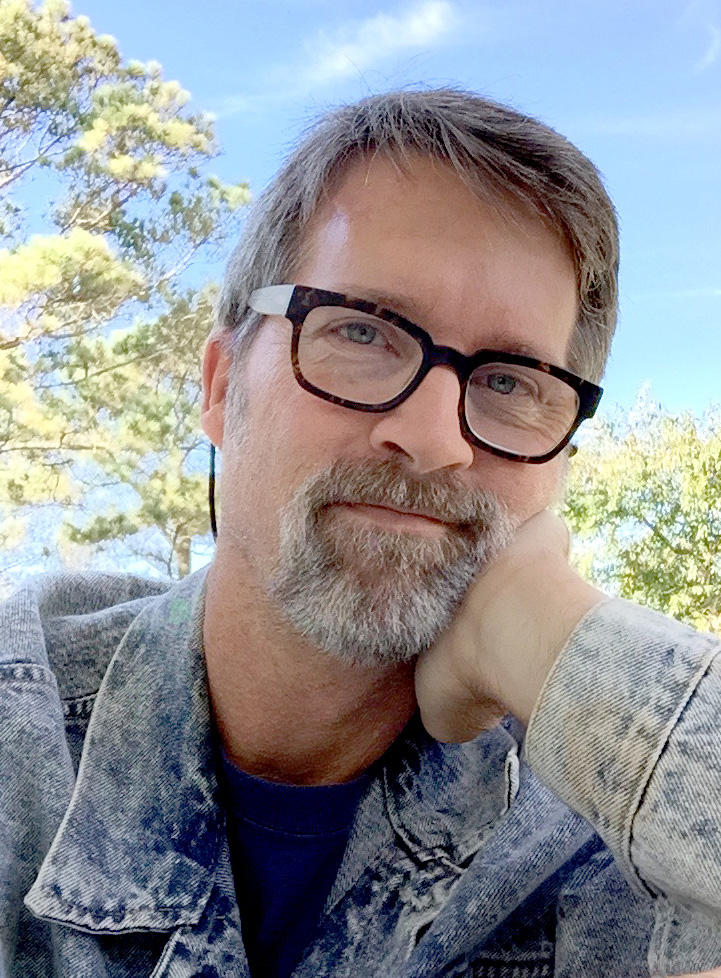
John Koehler - Owner & Publisher is a multi-talented, award-winning designer, entrepreneur, ministry volunteer, and author of three books. A 1980 graduate from Virginia Commonwealth University with a BFA in Communications Arts and Design, John went on to graduate studies at George Washington University, in Washington, DC.

After stints as Art Director at several DC area ad agencies, John started Koehler Studios Inc. in 1993. Since then, Kim Nelson joined the team as the Creative Director, and in 2010 bought the studio and re-christened it as Red Chalk Studios. John is a past president of the local Ad Club and is a member of The Noblemen, a fundraising group for kids.

John has also served with Young Life Capernaum in Hampton Roads, a ministry that serves kids with disabilities. Perhaps his best known accomplishment was winning the 1991 Boomerang World Championship in Perth, Australia. He was also a member of the Foster’s Boomerang 2000 Team, a touring demo team that taught the NFL, MLB and others the gospel of boomerangs. In 2005, John published his first book, Bipolar by Koehler, about living with bipolar syndrome. Since then, he has given many talks around the state and in schools to help people better understand how to survive brain illness and avoid suicide. In 2007, Koehler published Benjamin: the Road to Capernaum, a novel based on a crippled man in the Bible who was healed by a certain Jewish rabbi. His latest book is My Inflatable Heart, a series of short stories about Capernaum and life recollections.

Married since 1982 to his college sweetheart, Patty, an art teacher at Old Donation Center for the Gifted and Talented, John is the proud father of Kimmi and Danielle and grandfather to Lilli and Eli. John lives and works in Virginia Beach, Virginia.

One Response to Benjamin – The Road to Capernaum

Leave a Reply

Your email address will not be published. Required fields are marked *

You may use these HTML tags and attributes: <a href="" title=""> <abbr title=""> <acronym title=""> <b> <blockquote cite=""> <cite> <code> <del datetime=""> <em> <i> <q cite=""> <strike> <strong>

IN THE NEWS:

  • Facebook
  • LinkedIn
  • Twitter
  • RSS Feed

Which cover do you like for "Refuge?"

View Results

Loading ... Loading ...

Which cover do you like for "Virginia is for Mysteries?"

View Results

Loading ... Loading ...

Which cover do you like for "The Drone Enigma?"

View Results

Loading ... Loading ...

Which cover do you now like for "Murder in the Rockies?"

View Results

Loading ... Loading ...